Writing on AI in software development
Field Notes
Notes from running an engineering org where AI writes most of the code. Not predictions about one.
Everything here started as something I worked out in production and then wrote down. The specifics are real: the tools, the gates, the org changes, and the arguments I lost before I won them. Where the industry data supports or complicates the argument, I have said so and linked the source.
There are two ways in. The posts are short, standalone pieces, most of them first written for LinkedIn, where new ones still appear first - follow along there. The AI Platform Map is a six-part series that pulls them into one system. Or browse by topic.
These notes span more than one role. I joined SteadyIQ in June 2026; the engineering-organization stories below draw mostly on my time leading engineering at hc1 before that, and the distributed-team piece covers about fifteen years. Each post says which era it is describing.
The newest writing is a six-part series, The AI Platform Map: the nine layers an AI engineering platform needs so that trusting a change costs less human attention. It follows the posts below.
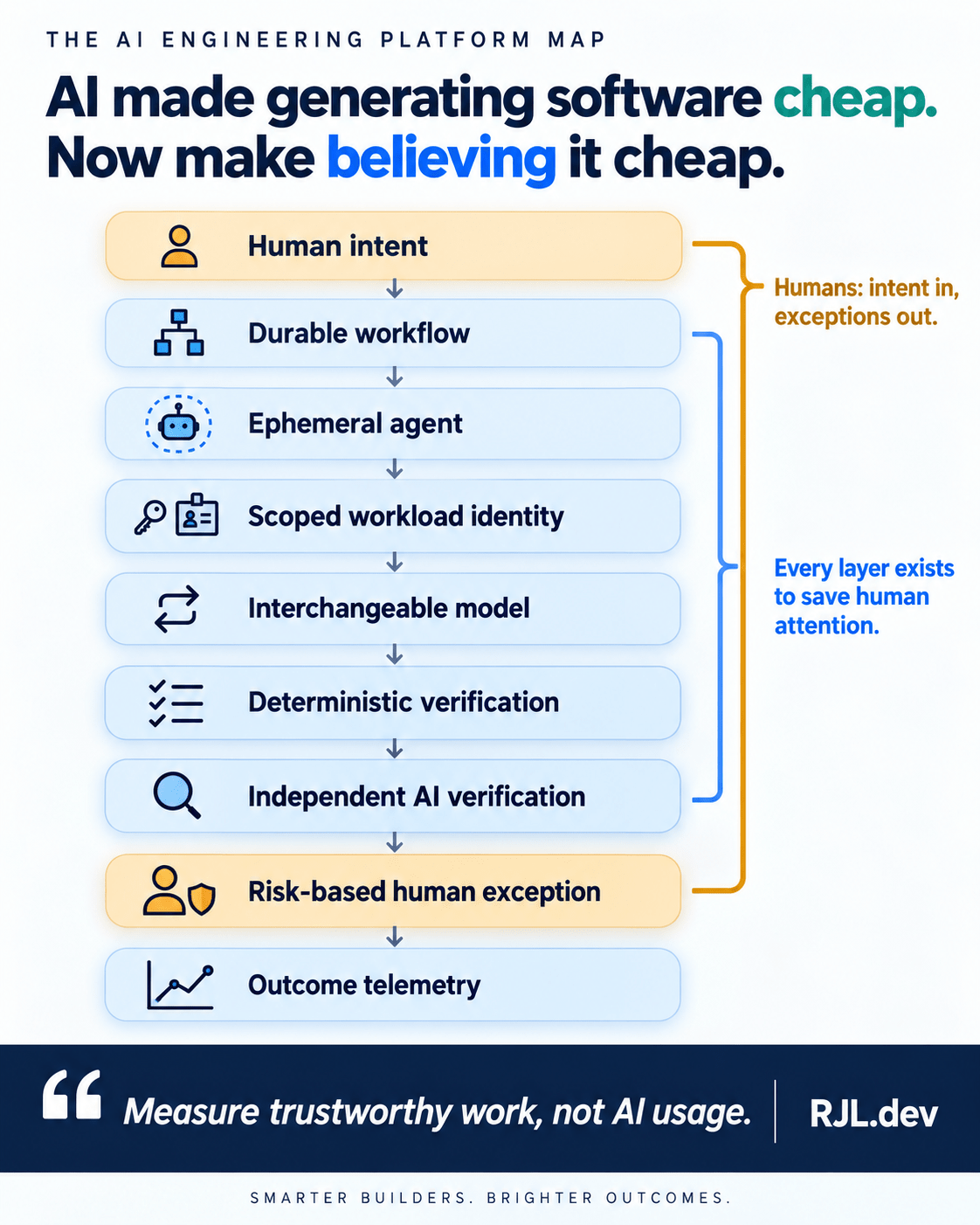 A six-part series, about 14 min in all The AI Platform Map AI made generating software cheap; the series is about making it cheap to believe the result. Six posts walk the nine layers of an AI engineering platform: written intent and a durable workflow that outlives the agent, ephemeral agents with their own scoped identity, a model you can swap and measure, three verification layers that send a person only what needs a person, and telemetry that counts trustworthy work instead of AI usage. Start with part 1
Browse by Topic
The same twenty posts, grouped by the question they answer.
Delivery and the Moving Bottleneck
Working With Agents
Adoption, ROI and Leadership
The Posts
Fourteen standalone posts in the order I would read them. Each is its own page; the first seven make the argument, the rest are what it looks like in an organization. The six-part platform series follows them.
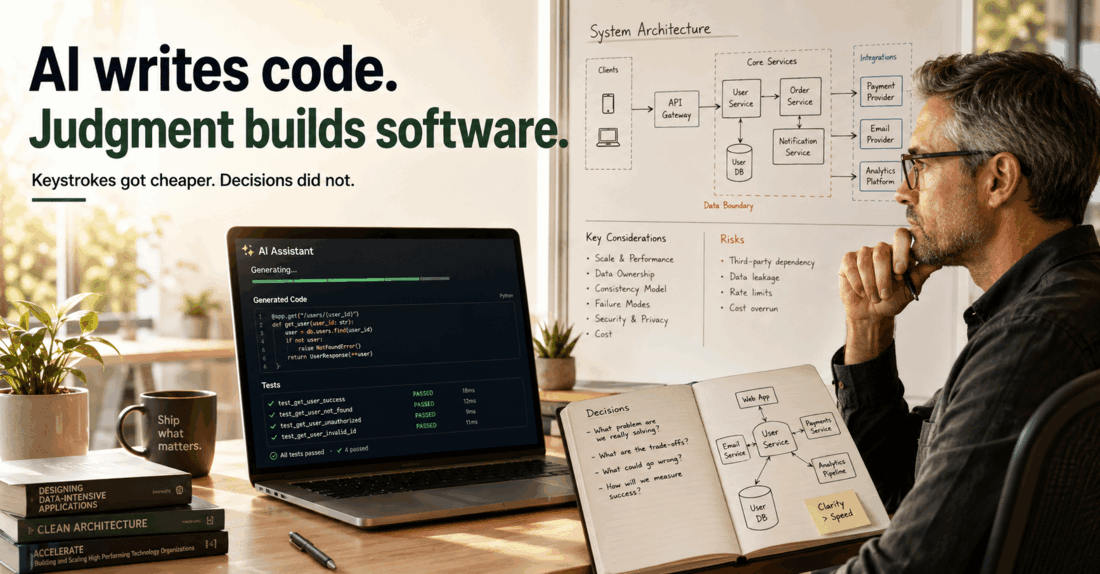
When Most of the Code Is AI-Written
3 min read Current practice, 2026 A high share of AI-written code measures keystrokes, not engineering. The scarce skill is deciding which code should exist at all. Read the post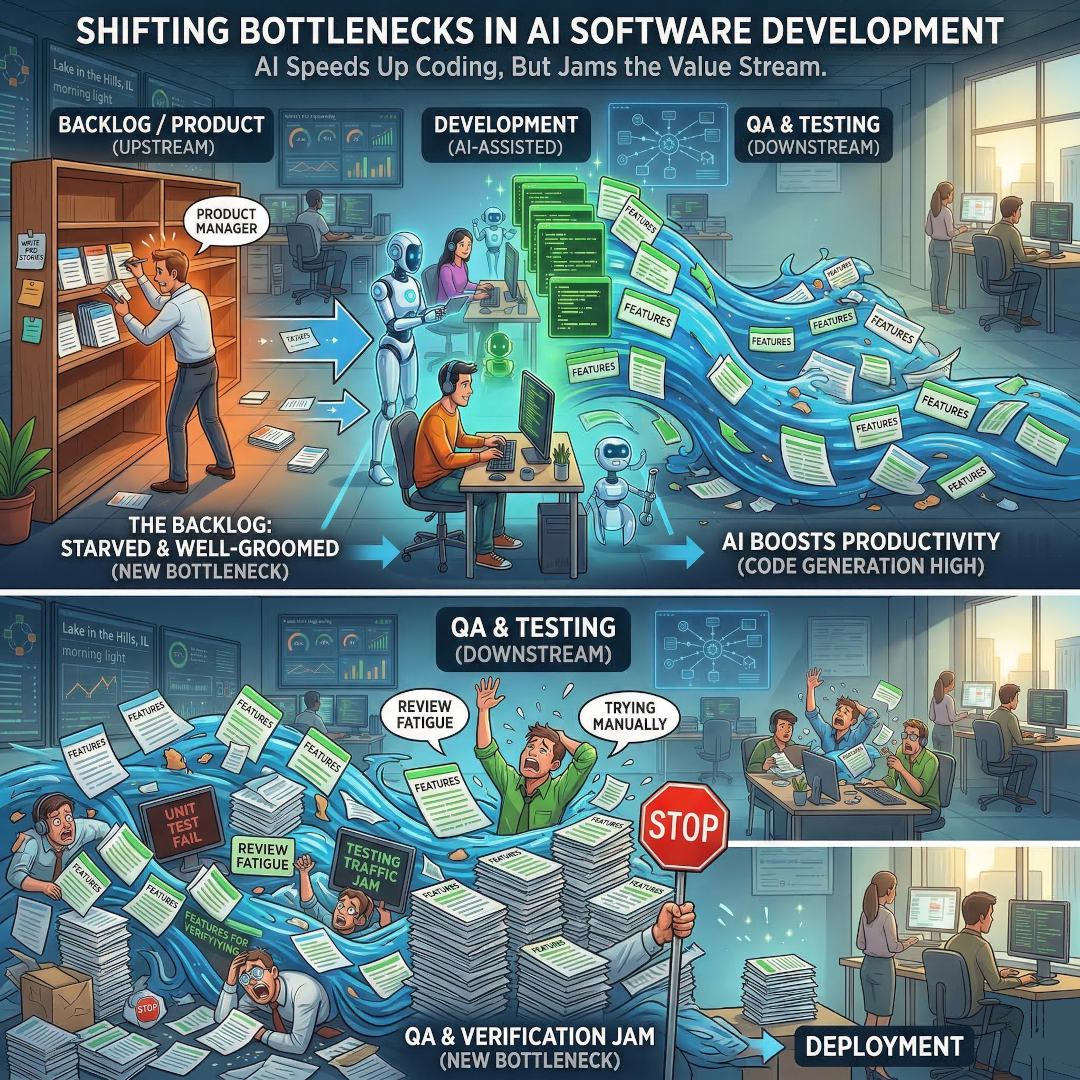
We Did Not Remove the Bottleneck. We Moved It
3 min read hc1, 2025-2026 Output went up and the constraint moved: review, QA, backlog grooming and downstream pipelines. Goldratt called it in 1984. Read the post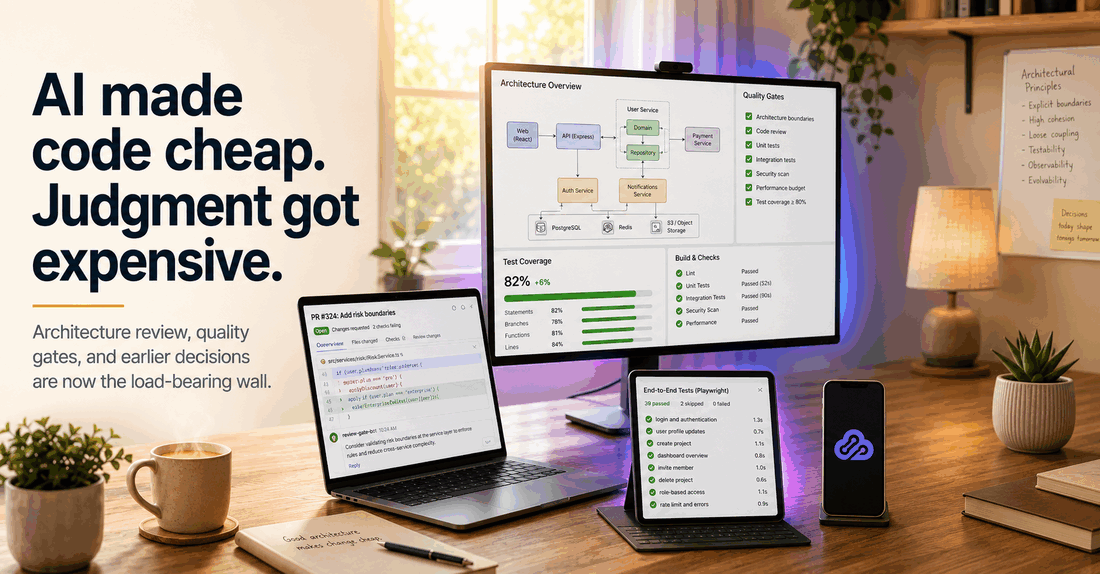
Where the Bottleneck Moved
4 min read hc1, 2025-2026, and carried into SteadyIQ When implementation goes from days to hours the review queue backs up. We made review slower and more expensive on purpose. Read the post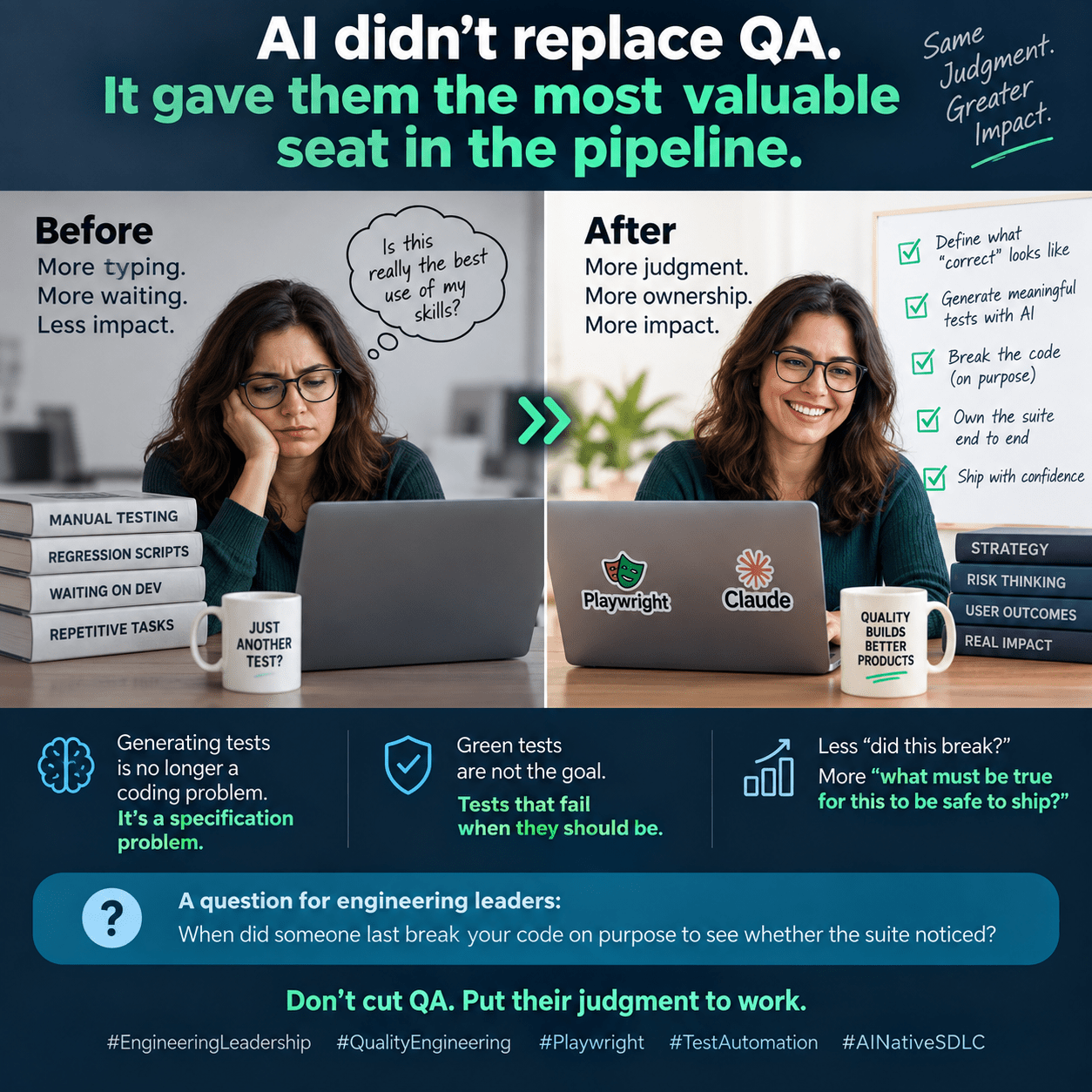
AI Did Not Replace QA. It Deleted the Typing
3 min read hc1, 2025-2026 Teaching QA to generate Playwright suites with Claude gave them the most valuable seat in the pipeline. A test is a specification problem. Read the post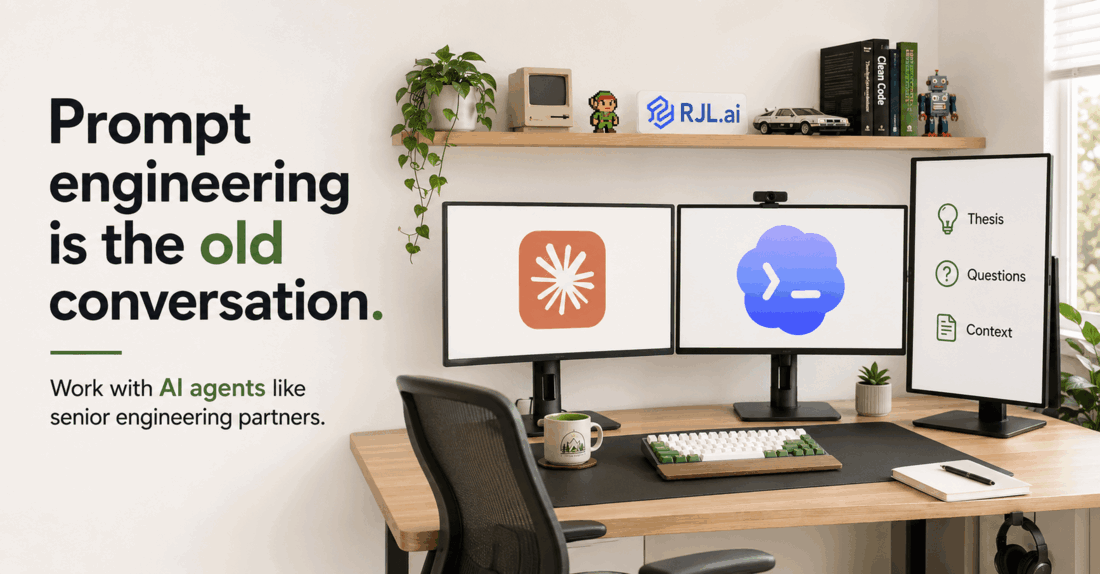
Work With Agents Like Senior Engineers
3 min read Current practice, 2026 Prompt engineering is table stakes. Lead with a thesis, ask what good looks like, and force the agent across the full context. Read the post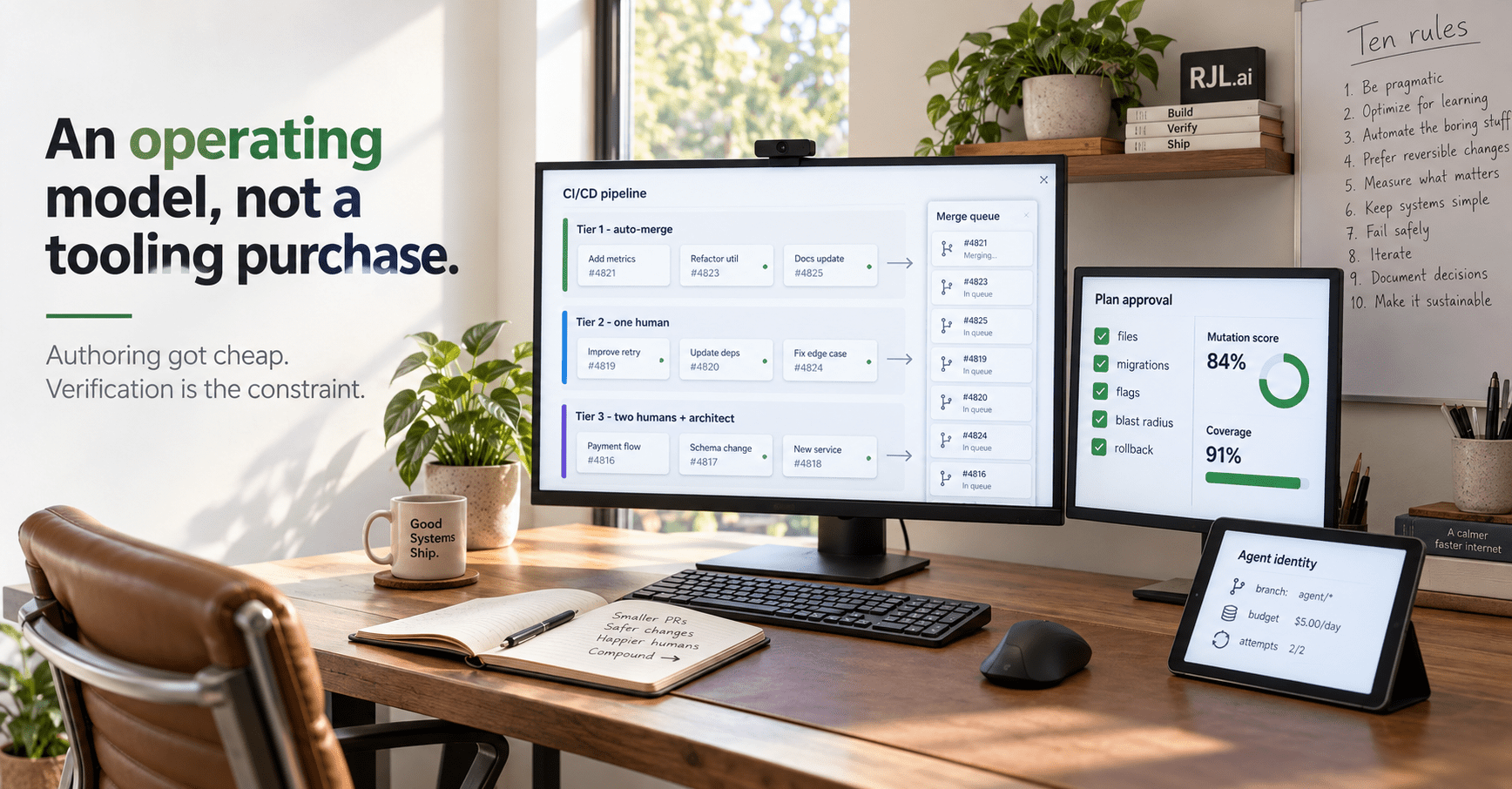
An Operating Model, Not a Tooling Purchase
8 min read Operating guide, September 2026 Authoring got cheap and verification is the constraint. Ten rules, the practices behind them, and how the rollout fails. Read the post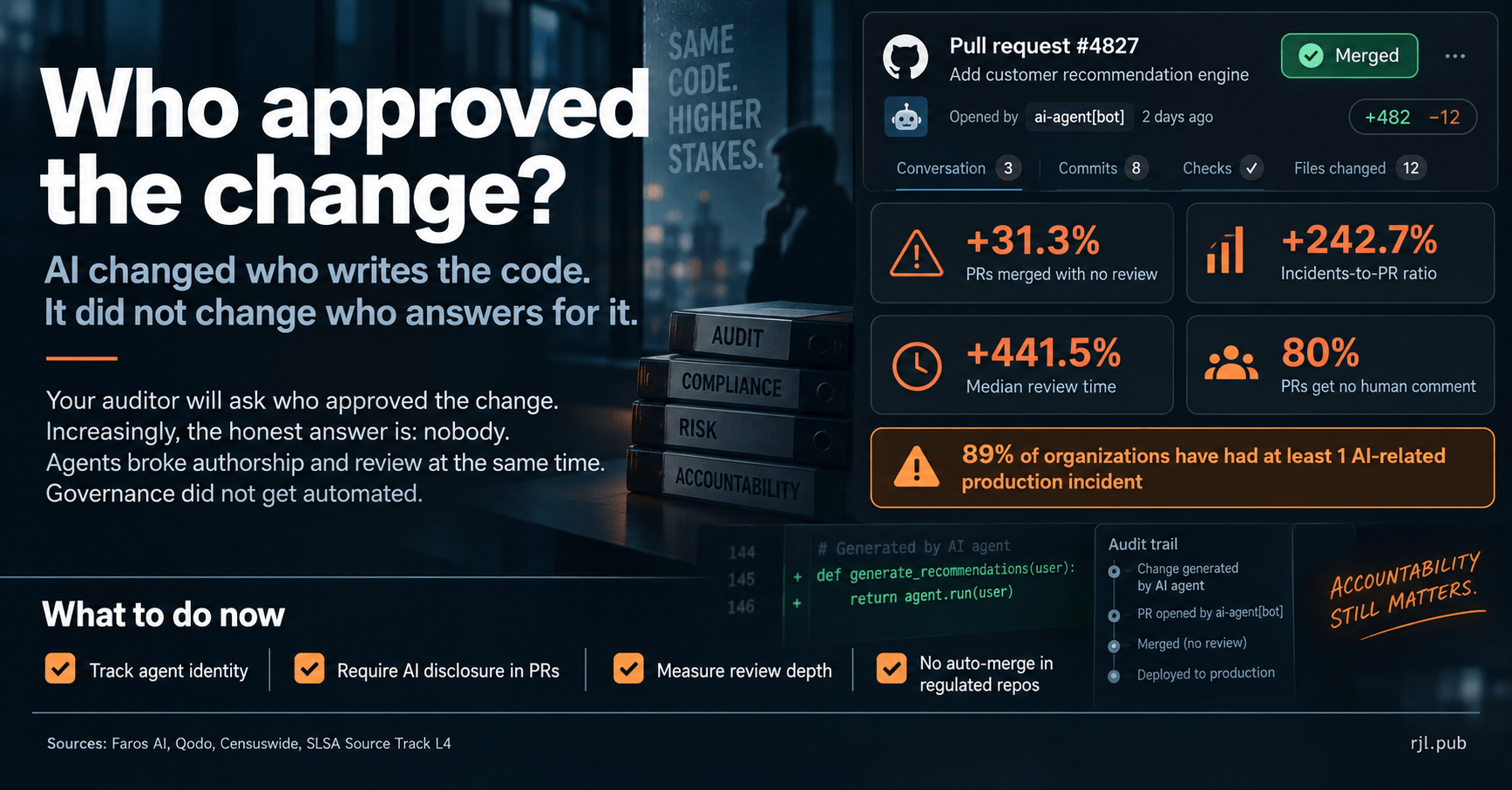
Who Signs for Agent-Written Code?
3 min read Regulated delivery, September 2026 Agents broke both halves of change management: the author is not a person, and often neither is the reviewer. Accountability did not get automated. Read the post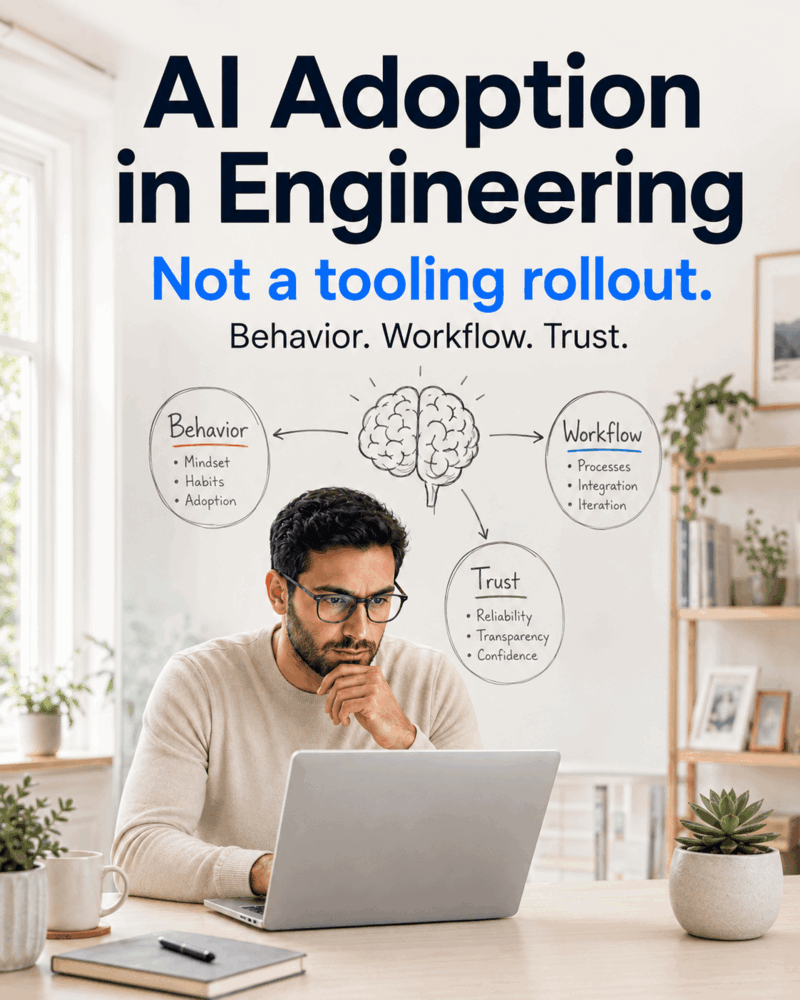
Adoption Is a Trust Problem, Not a Tooling Rollout
3 min read Pattern across several orgs, 2024-2026 Engineers are not resistant to AI. Adoption fails when leadership rolls it out like a corporate wellness program. Read the post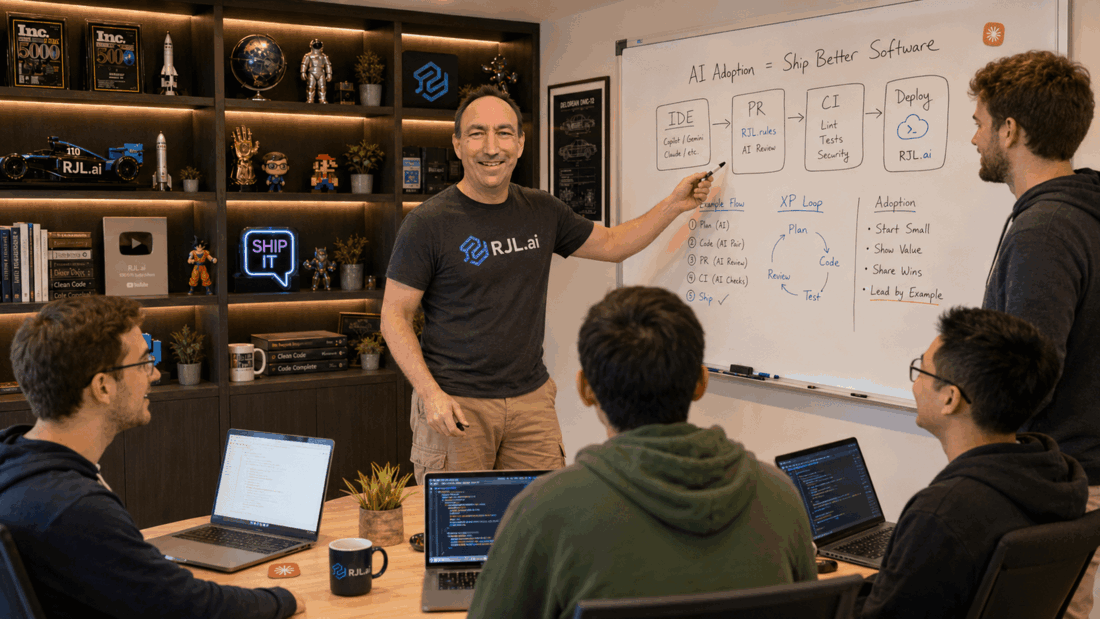
If There's So Little Risk, Why Wait?
2 min read hc1, 2025-2026 How one risk-averse architect went from cautious to proficient in weeks, and what it taught me about recalibrating perceived risk. Read the post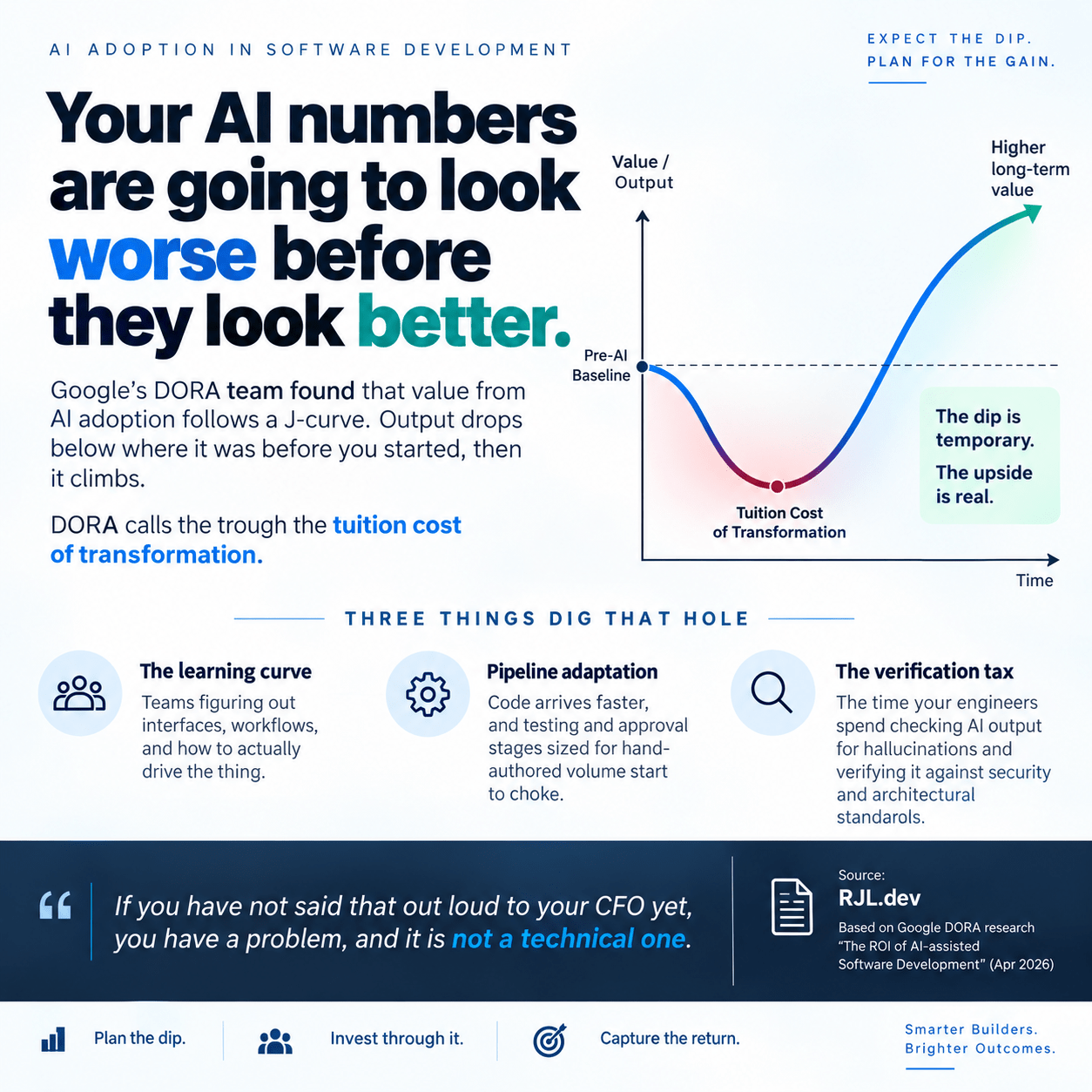
Your AI Numbers Are Going to Look Worse Before They Look Better
3 min read Budget planning, 2026 DORA's 2026 research says AI value follows a J-curve. Name the dip to finance before you spend, or the budget gets cut at the trough. Read the post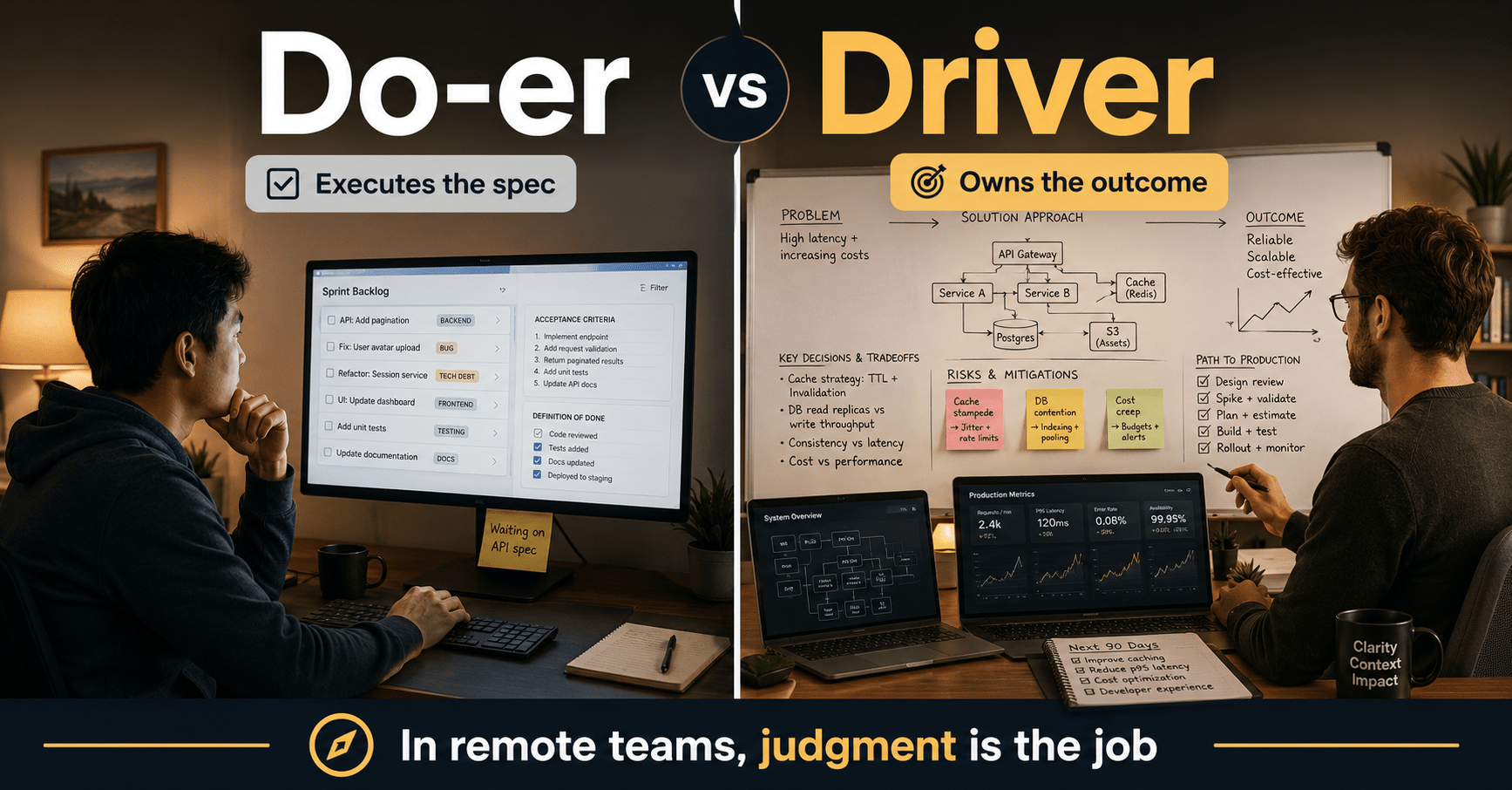
I Am Not Hiring a Doer. I Am Hiring a Driver
2 min read Hiring for a fully remote senior role, 2026 I passed on two competent senior candidates. Both were executors. The role needs someone who owns a problem from ambiguity to shipped. Read the post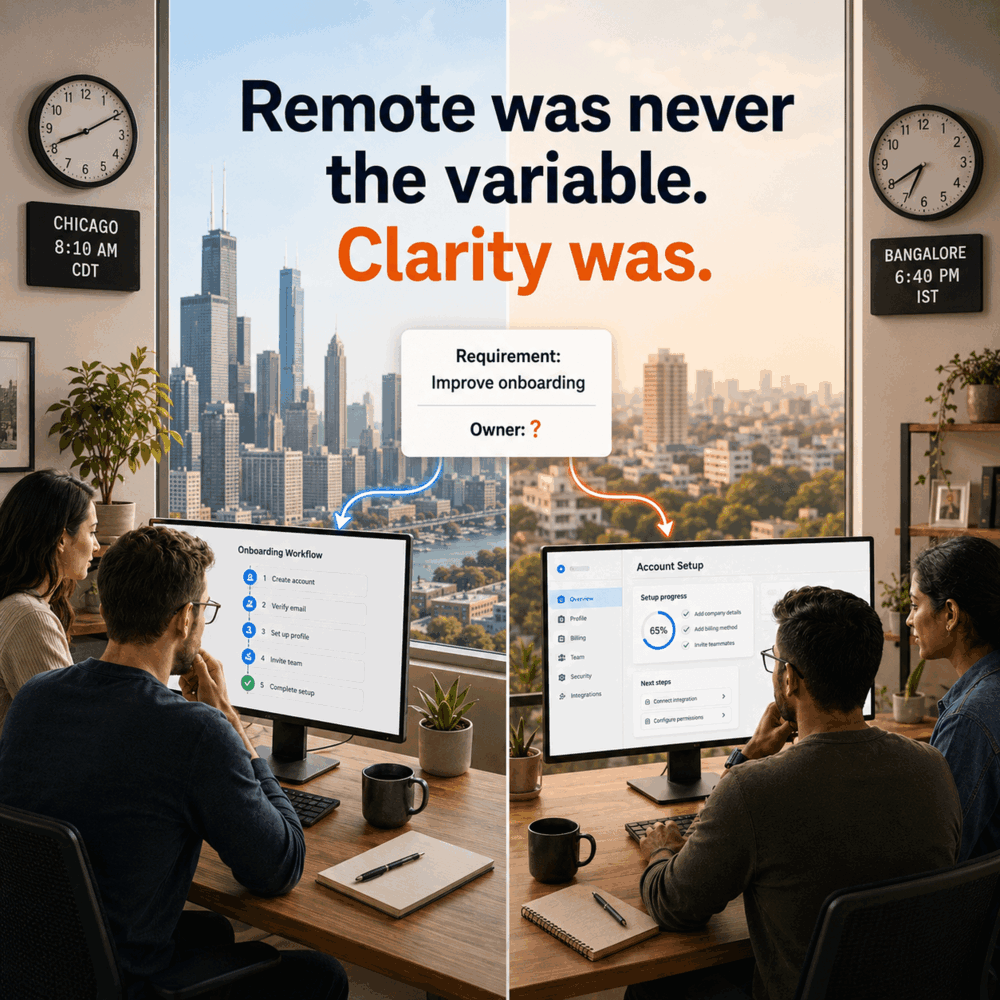
Remote Was Never the Variable
2 min read Spans 2012 to now, across every role since Leading distributed engineering teams since 2012. Distance does not kill teams, ambiguity does, and the fix is naming the owner. Read the post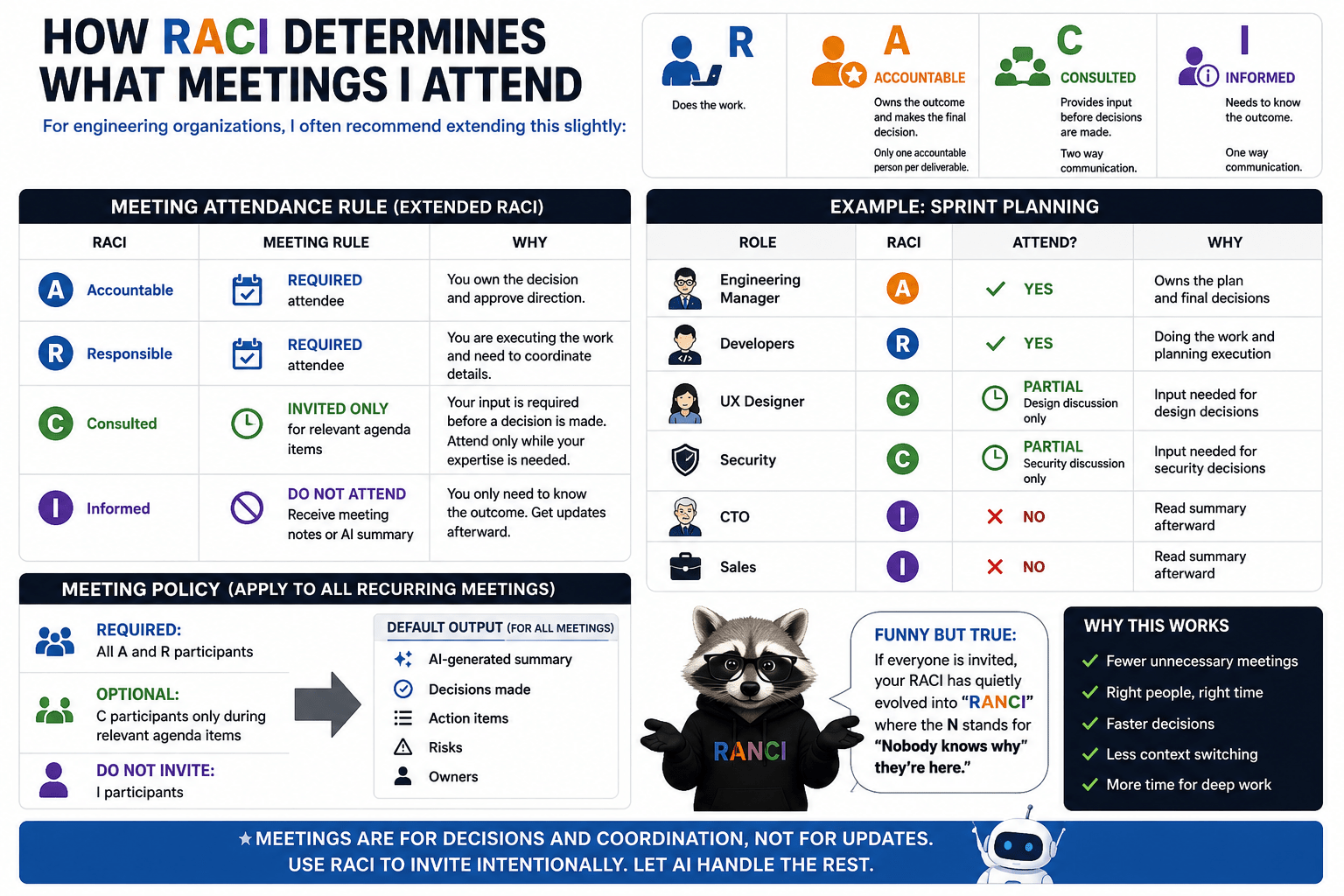
Your RACI Role Says Whether to Attend
2 min read Meeting policy, applied across several orgs A one-hour meeting with twelve people is twelve hours of company time. Accountable and Responsible attend. Informed reads the summary. Read the post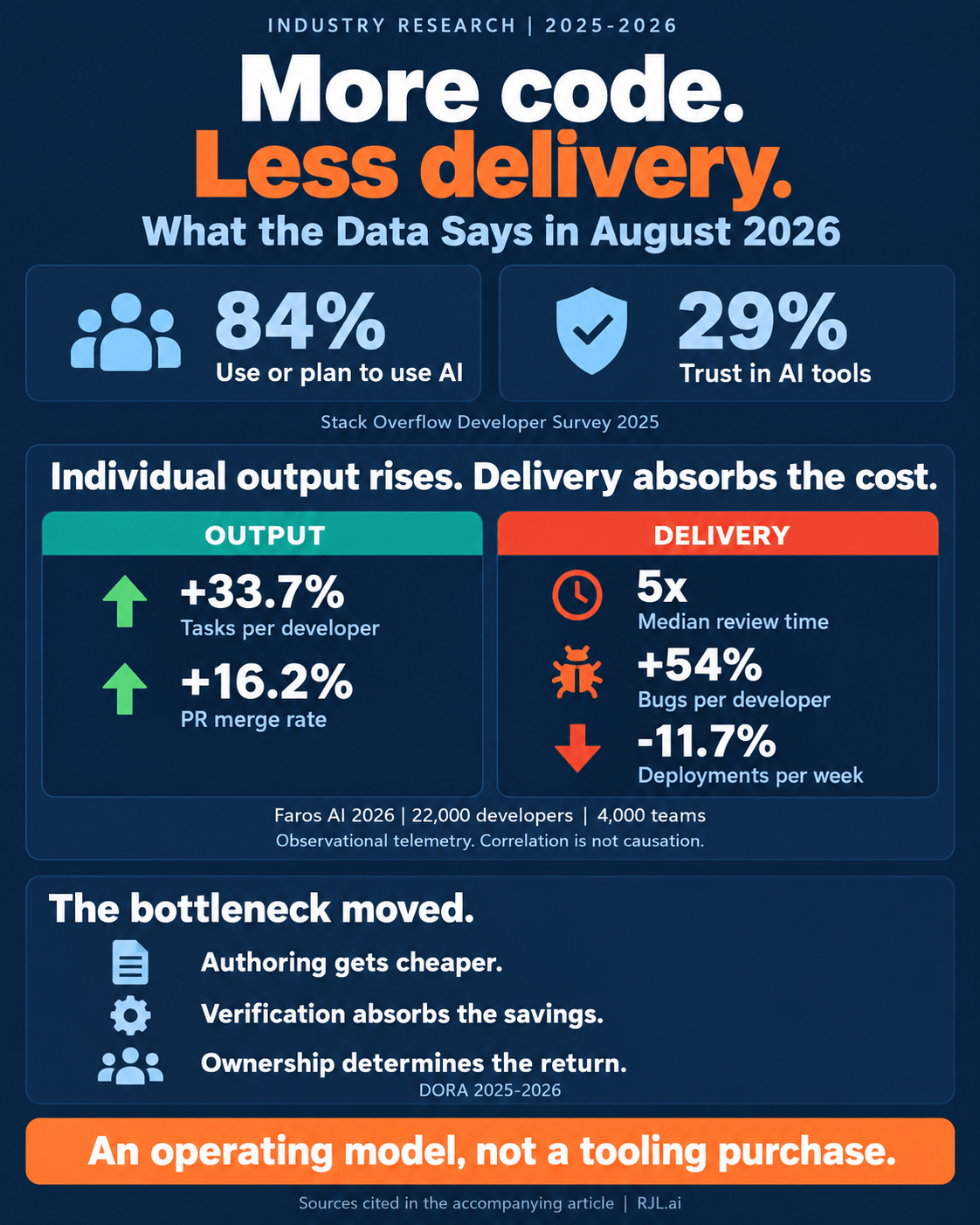
What the Data Says in August 2026
7 min read Industry data, published 2025-2026 Adoption is near-universal and trust is falling. DORA, Faros, METR and GitClear on where AI-assisted delivery actually stands. Read the post
The AI Platform Map
A six-part series. AI made generating software cheap; engineering now has to make believing it cheap too. The first post lays out the nine layers an AI engineering platform needs, from human intent at the top to outcome telemetry at the bottom, and the five after it take the map apart one piece at a time.
Humans sit at the top and the bottom of the map: intent going in, exceptions coming out. Every layer in between exists to lower how much human attention it costs to trust a change. Read them in order.
-
AI Made Generating Software Cheap
2 min read Part 1 of 6 - the whole map Engineering now has to make believing it cheap too. Nine layers, with humans only at the top and the bottom: intent in, exceptions out. Read part 1 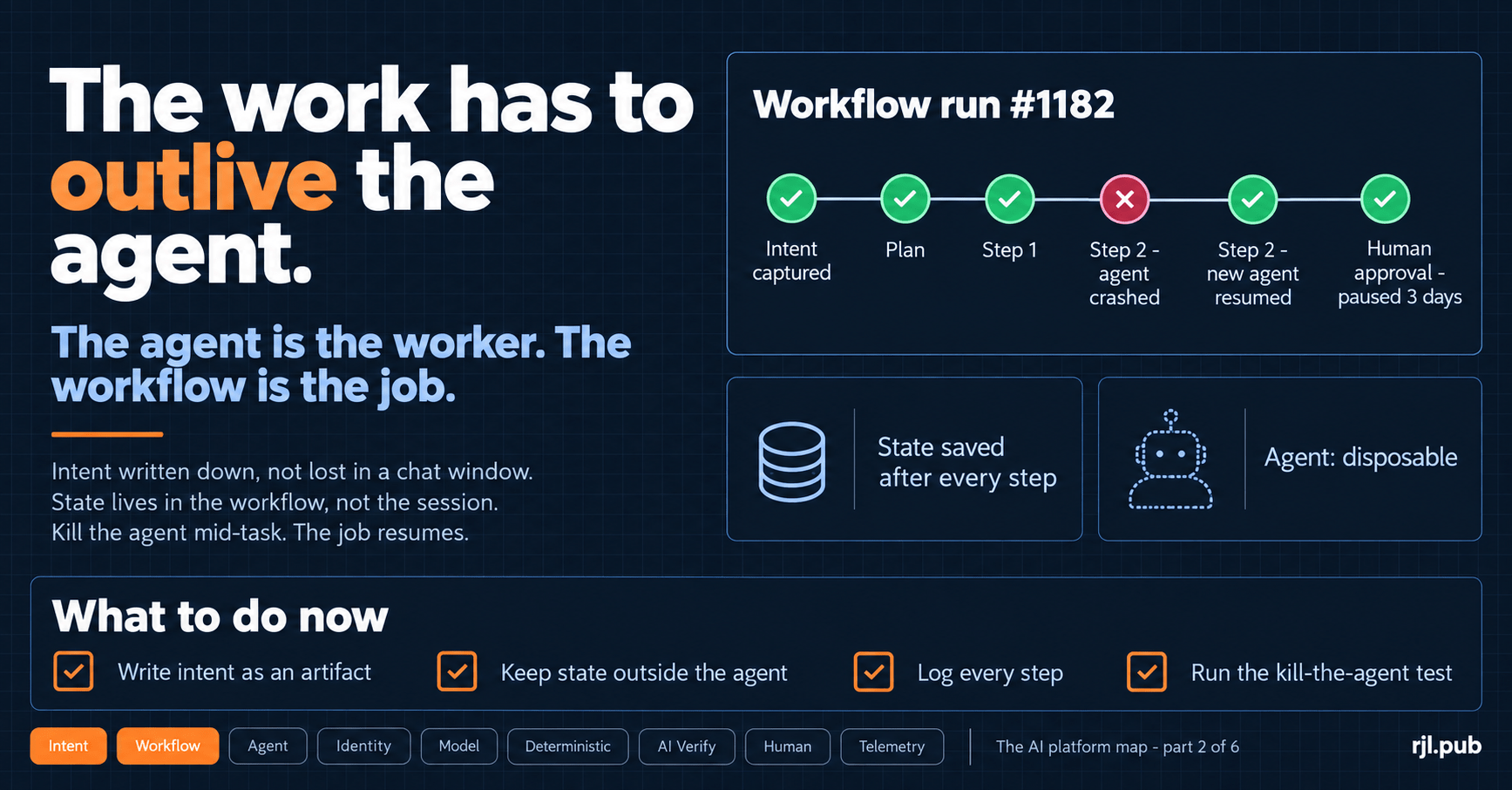
The Work Has to Outlive the Agent
2 min read Part 2 of 6 - intent and workflow Intent is a written artifact and the durable workflow owns the job. Kill your agent halfway through a real task and see what survives. Read part 2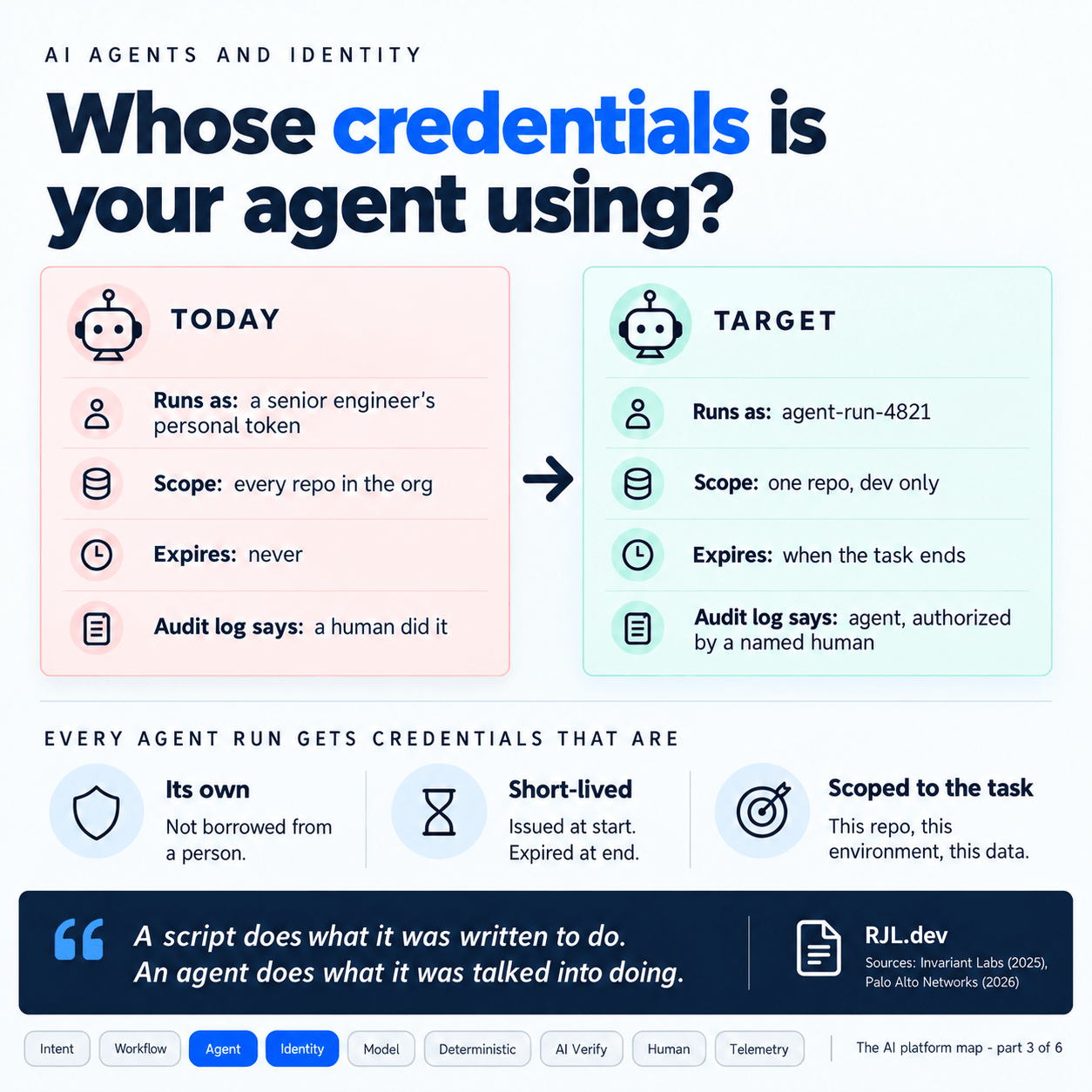
Whose Credentials Is Your Agent Using?
3 min read Part 3 of 6 - agent and identity Ephemeral agents with their own short-lived, task-scoped credentials. You cannot stop an agent being talked into something; you can cap what it gets. Read part 3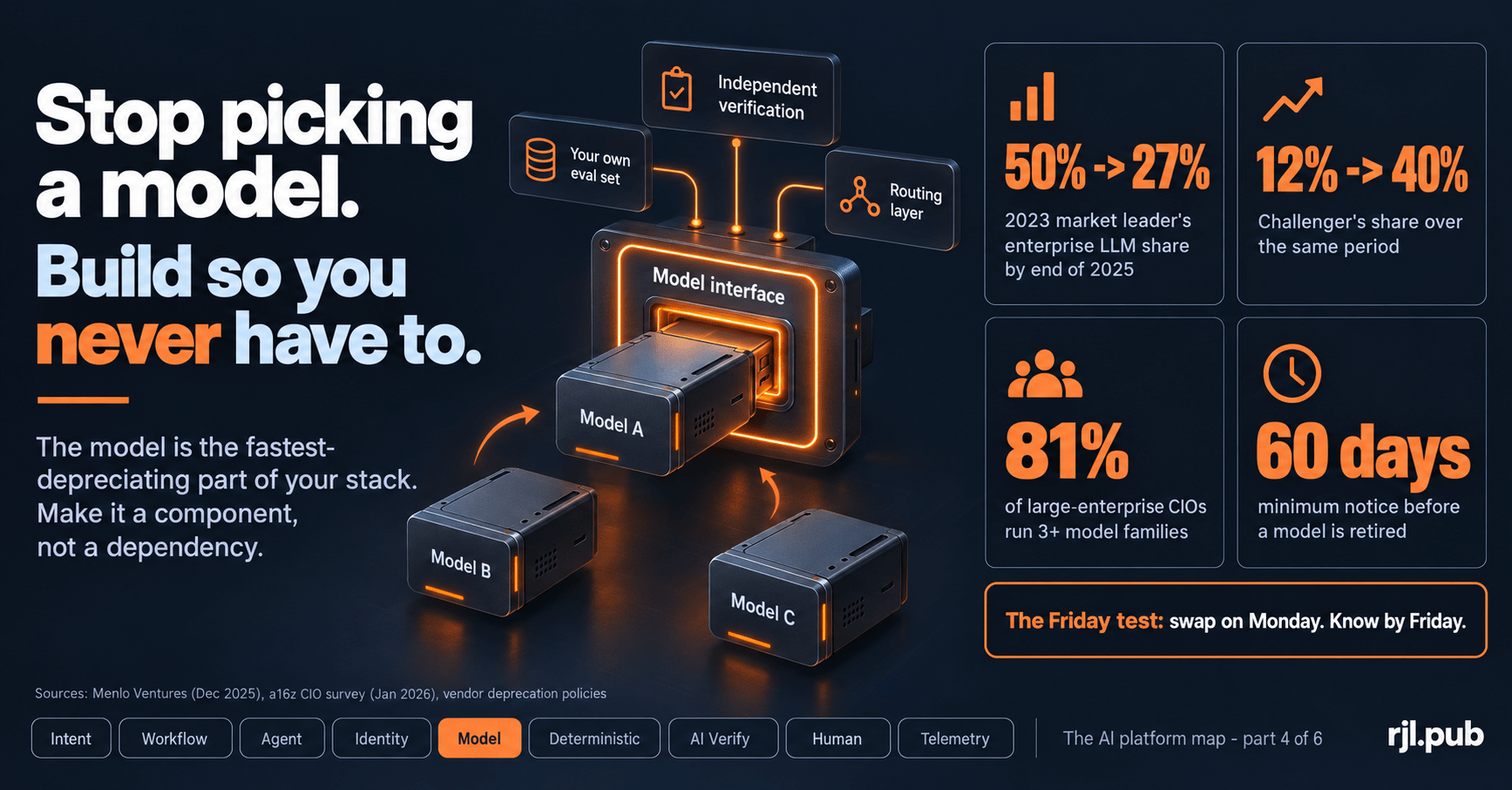
Stop Picking a Model
2 min read Part 4 of 6 - the model The model is the fastest-depreciating part of your stack. Lock-in comes from prompts and missing evals, not the API. Could you swap by Friday? Read part 4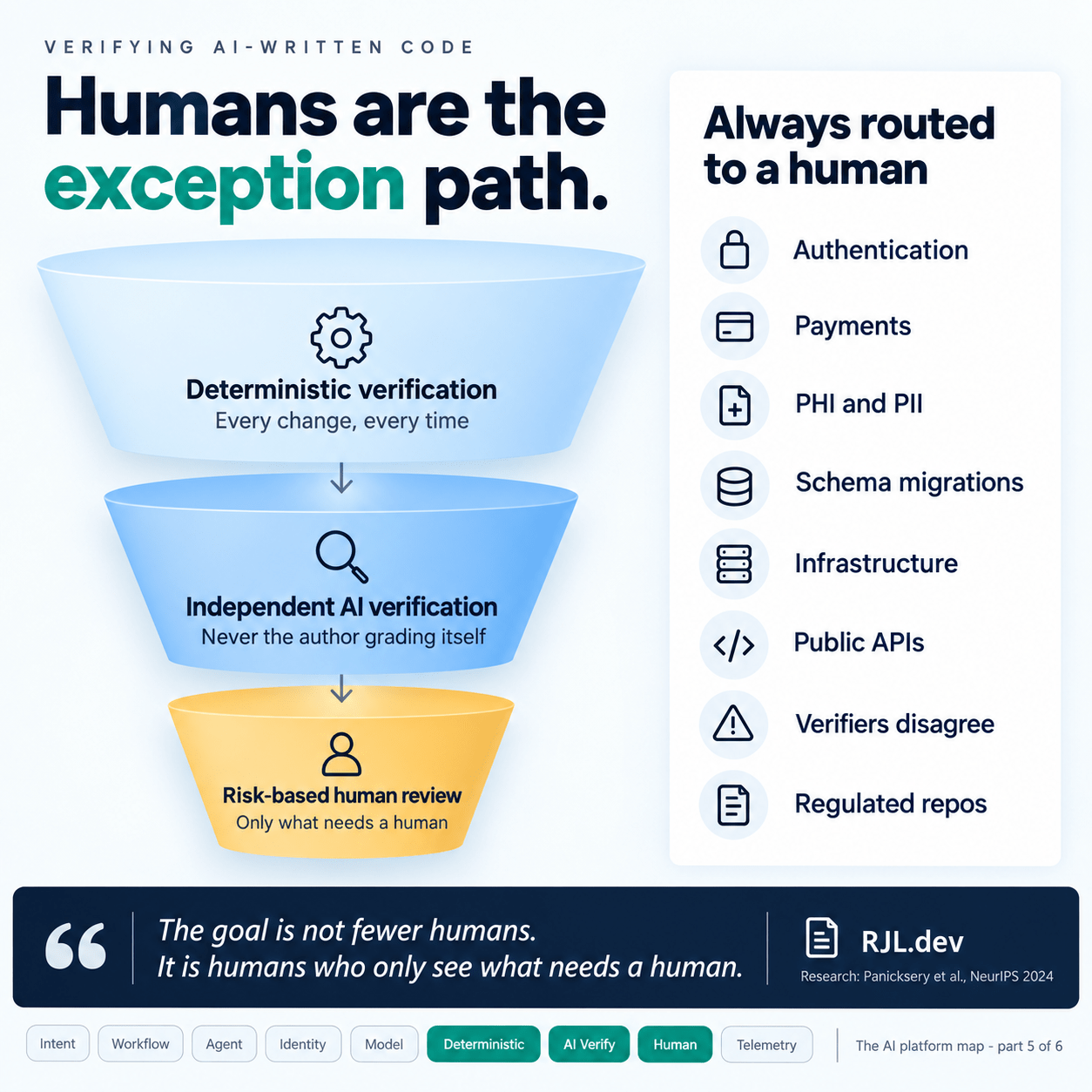
Humans Are the Exception Path
2 min read Part 5 of 6 - verification Deterministic checks, then an independent AI reviewer, then a human only where the risk demands one. Humans who only see what needs a human. Read part 5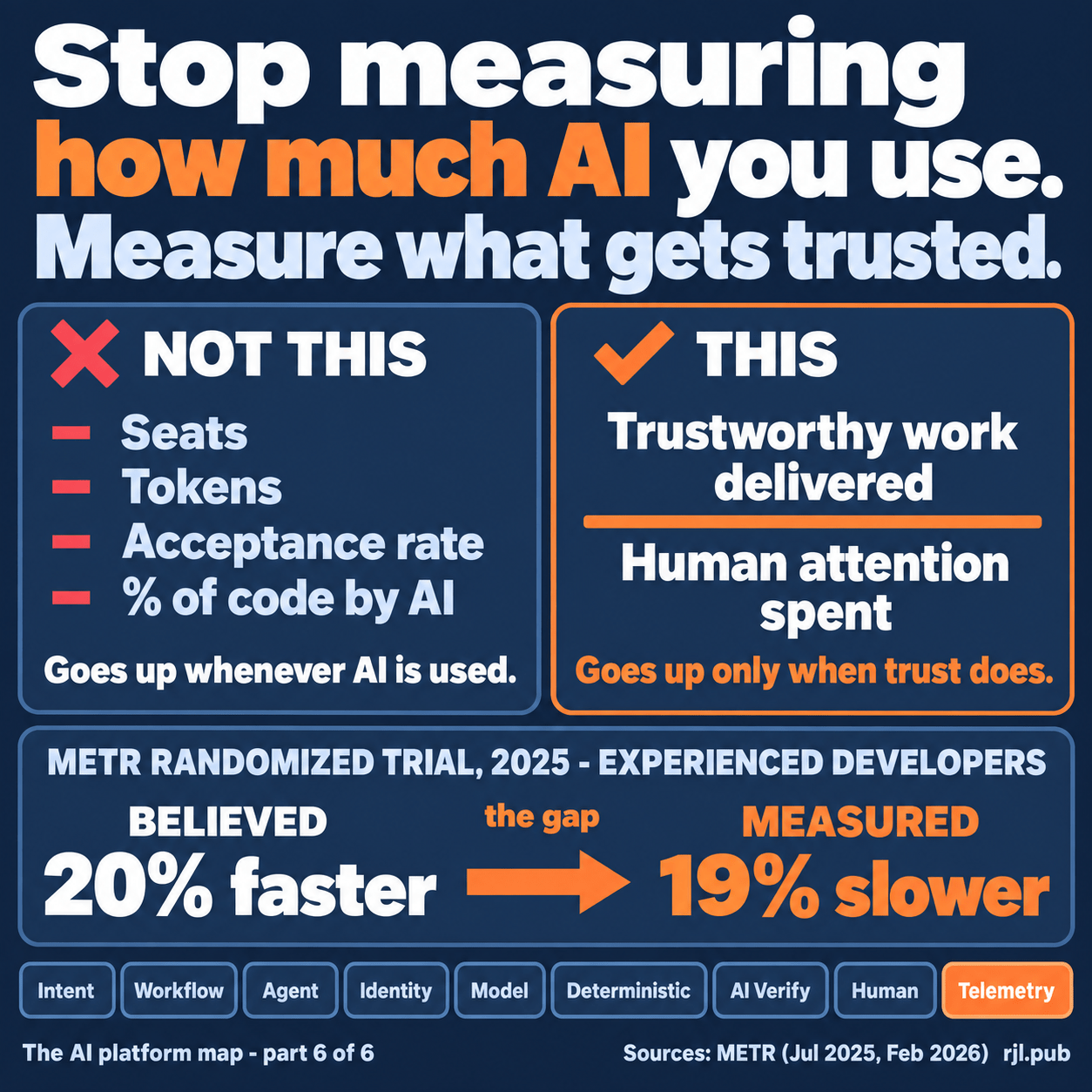
Stop Measuring How Much AI You Use
2 min read Part 6 of 6 - telemetry Usage numbers rise whether or not anything got better. Measure trustworthy work delivered per unit of scarce human attention instead. Read part 6
The Through-Line
Twenty posts, drawn from more than one job and more than one decade, and they keep landing on the same point from different directions. Code got cheap. Deciding which code should exist did not. That is the whole shift, and everything else here is what it looks like when you take it seriously inside a real organization.
Start with the job itself. When most of the code is AI-written, the share of it a person typed stops being a useful number, and the scarce skill is judgment about what to build and where it sits. We did not get rid of the constraint by speeding up implementation; we moved it into review, QA, grooming and the pipelines downstream. So review became the load-bearing wall, and we made it slower and stricter on purpose rather than approving faster to clear the queue. The quality team went the other way: AI did not replace QA, it deleted the typing and left the judgment about what correct looks like, which turned out to be the job all along. The 2026 industry data says the same thing from the outside: adoption is near-universal, trust is falling, and the time saved writing code is being spent verifying it.
The second thread is how you work with the tools once you accept that. An agent that holds context, calls tools and stays on a task is not autocomplete. Work with it the way you would work with a senior engineer: lead with a thesis, ask what good looks like, make it reason across the whole system, and expect pushback. A better prompt earns no credit anymore. Better questions still do. And once the agents run in the pipeline, the whole thing has to be written down as an operating model rather than a tooling purchase: ticket contracts, plan approval, risk-tiered review, agents run as services with an identity and a budget, and outcome metrics against a baseline. The rule that costs the most to enforce is the one about merges, because somebody still has to sign for agent-written code, and an agent plus a green check is not two parties.
The third thread is people. Every failed rollout I have watched failed on trust, not capability. Adoption is a trust problem: start where the pain already has budget, put the tools inside the workflow, measure outcomes, and treat the skeptics as the people protecting production. When one careful architect asked what we were protecting by waiting, the honest answer was nothing, and being first in the water did more than any adoption plan I could have written. The conversation that has to happen before any of it is with finance: the numbers look worse before they look better, and a dip you named beforehand is a plan while one you explain afterward is an excuse.
The last thread is older than any of the AI ones. Distributed teams taught me, starting in 2012, that distance was never the variable; ambiguity was. Name the owner. Write the decision down well enough to survive being read, because that is also what an agent needs from you. Let the RACI decide who attends the meeting, and give the hours back. And when you hire for that kind of team, hire a driver, not a doer: someone who takes a problem from ambiguity to shipped without being handed the steps.
The newest thread pulls the others into one system. The AI platform map starts from the same premise, that generating software got cheap and believing it did not, and lays out the nine layers whose job is to make trust cheaper: written intent and a workflow that outlives the agent, agents with their own scoped identity, a model you can swap and measure, verification that routes only the exceptions to a person, and telemetry that counts trustworthy work rather than AI usage.
Keystrokes got cheaper. Decisions did not. Every post here is about the second half.
Who Is Writing This
I am RJ Lindelof, Senior Director of Engineering, AI and Automation at SteadyIQ, where I lead the engineering organization for an income and employment verification platform used by state benefit agencies. I started there in June 2026; before that I led SaaS engineering at hc1, which is where most of the engineering-organization stories above come from. Twenty-plus years in regulated B2B SaaS across GovTech, HealthTech, EdTech, and FinTech, and I still write code.
The thinking behind these notes is on the approach page, the track record is on the proof page, and there is a fuller professional background at RJL.dev. If you are working through the same problems, compare notes with me.